
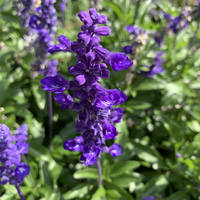
Data for: ENT532 Insect Diversity Collection (Jennings). Photo of Salvia plant, on which many apid bees were found.
This flower, which I believe to be in the genus Salvia, is found on Penn State's campus, outside of Head House II. During the summer many bees flock to these flowers (I've personally seen them through mid September as well). Curiously, certain larger apid bees will nectar rob these flowers instead of pollinating and obtaining the nectar the "traditional" way. I have noticed, however, that honeybees and smaller bumblebees will pollinate the flowers.
This image was deposited for ENT 532: Insect Biodiversity and Evolution in Fall 2023.
Files
-
Metadata
Work Title Data for: ENT532 Insect Diversity Collection (Jennings). Photo of Salvia plant, on which many apid bees were found. Access Creators - Alison H. Jennings
License No Copyright - U.S. Work Type Image Publication Date September 22, 2023 DOI doi:10.26207/jg0w-zq97 Geographic Area - State College - University Park
Deposited October 25, 2023 Versions
Analytics
Collections
This resource is currently not in any collection.
Work History
Version 1
published-
Created
-
Updated
-
Added Creator Alison H. Jennings
-
Added
IMG_8902.jpg -
Updated License Show ChangesLicense
- https://rightsstatements.org/page/NoC-US/1.0/
-
Published
-
Updated Description Show ChangesDescription
This flower, which I believe to be in the genus Salvia, is found on Penn State's campus, outside of Head House II. During the summer many bees flock to these flowers (I've personally seen them through mid September as well). Curiously, certain larger apid bees will nectar rob these flowers instead of pollinating and obtaining the nectar the "traditional" way. I have noticed, however, that honeybees and smaller bumblebees will pollinate the flowers.- This flower, which I believe to be in the genus Salvia, is found on Penn State's campus, outside of Head House II. During the summer many bees flock to these flowers (I've personally seen them through mid September as well). Curiously, certain larger apid bees will nectar rob these flowers instead of pollinating and obtaining the nectar the "traditional" way. I have noticed, however, that honeybees and smaller bumblebees will pollinate the flowers.
- This image was deposited for ENT 532: Insect Biodiversity and Evolution in Fall 2023.
-
Updated